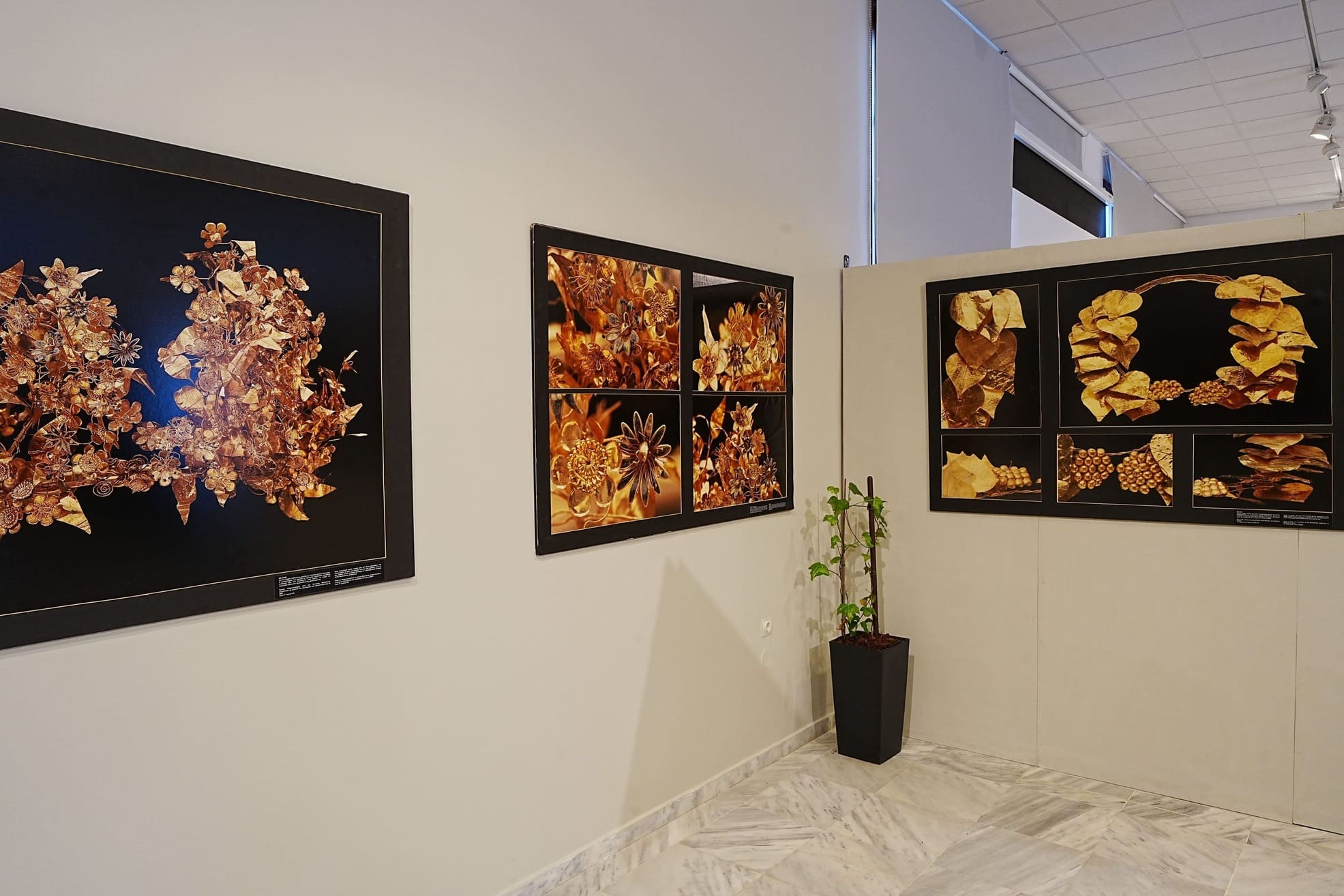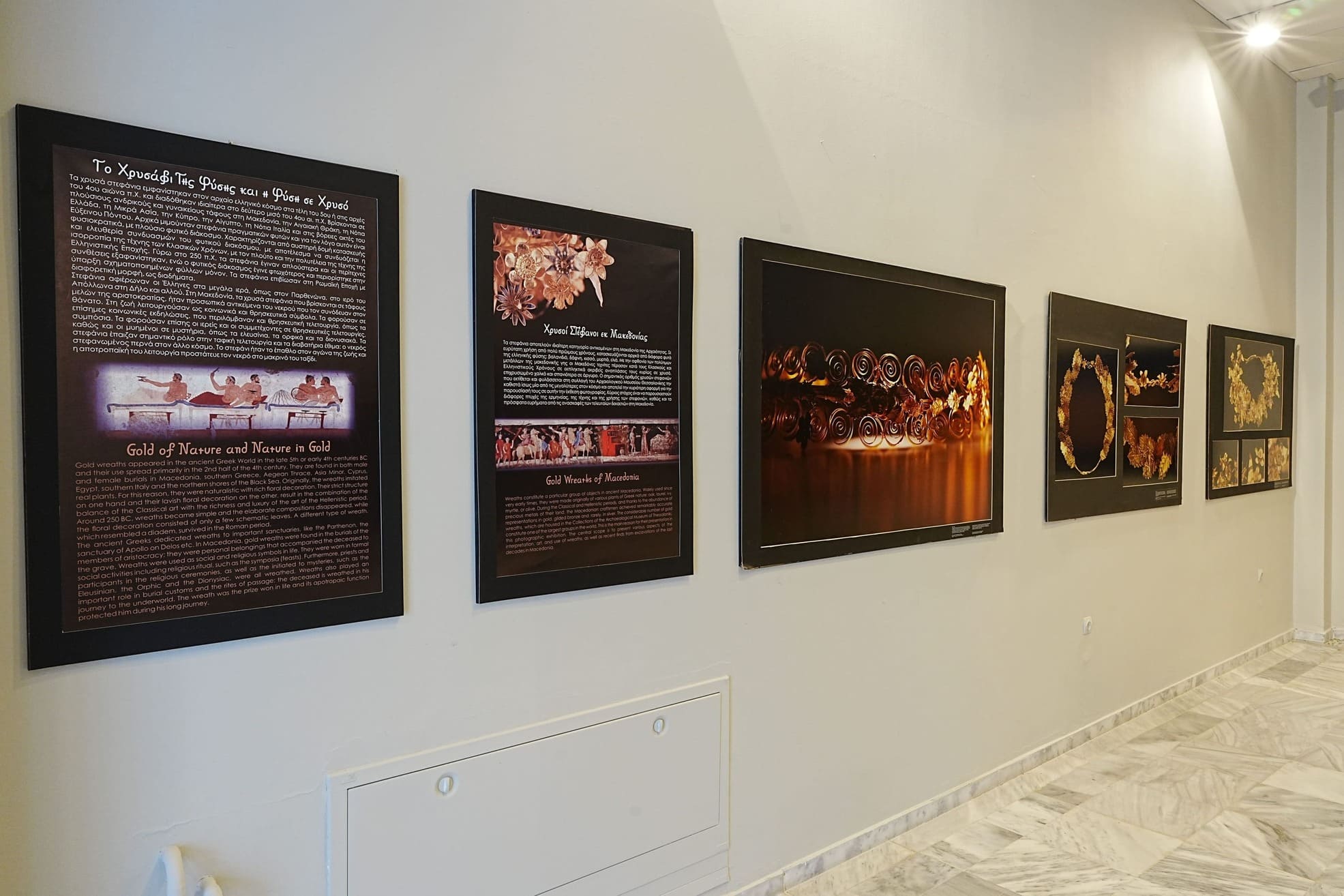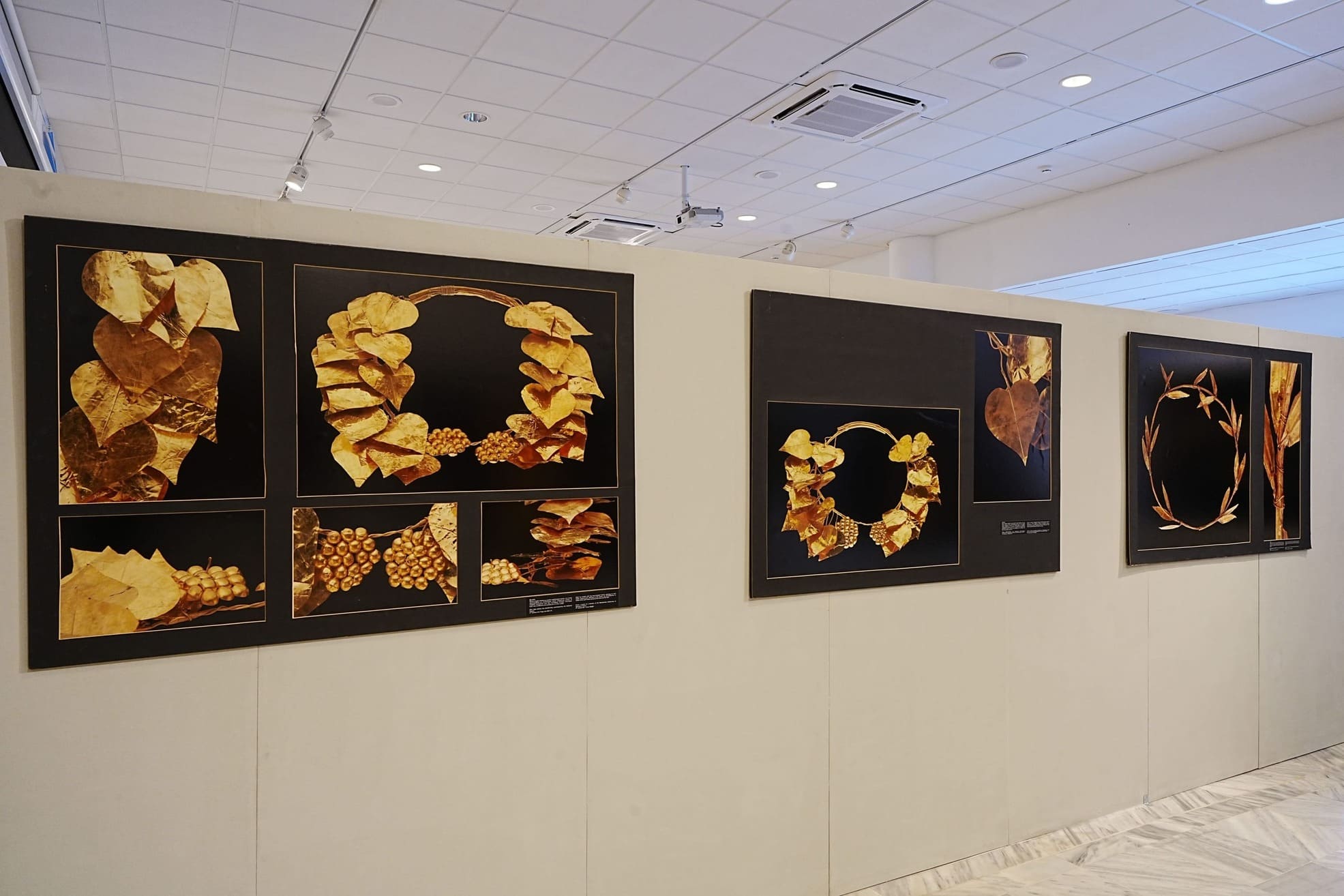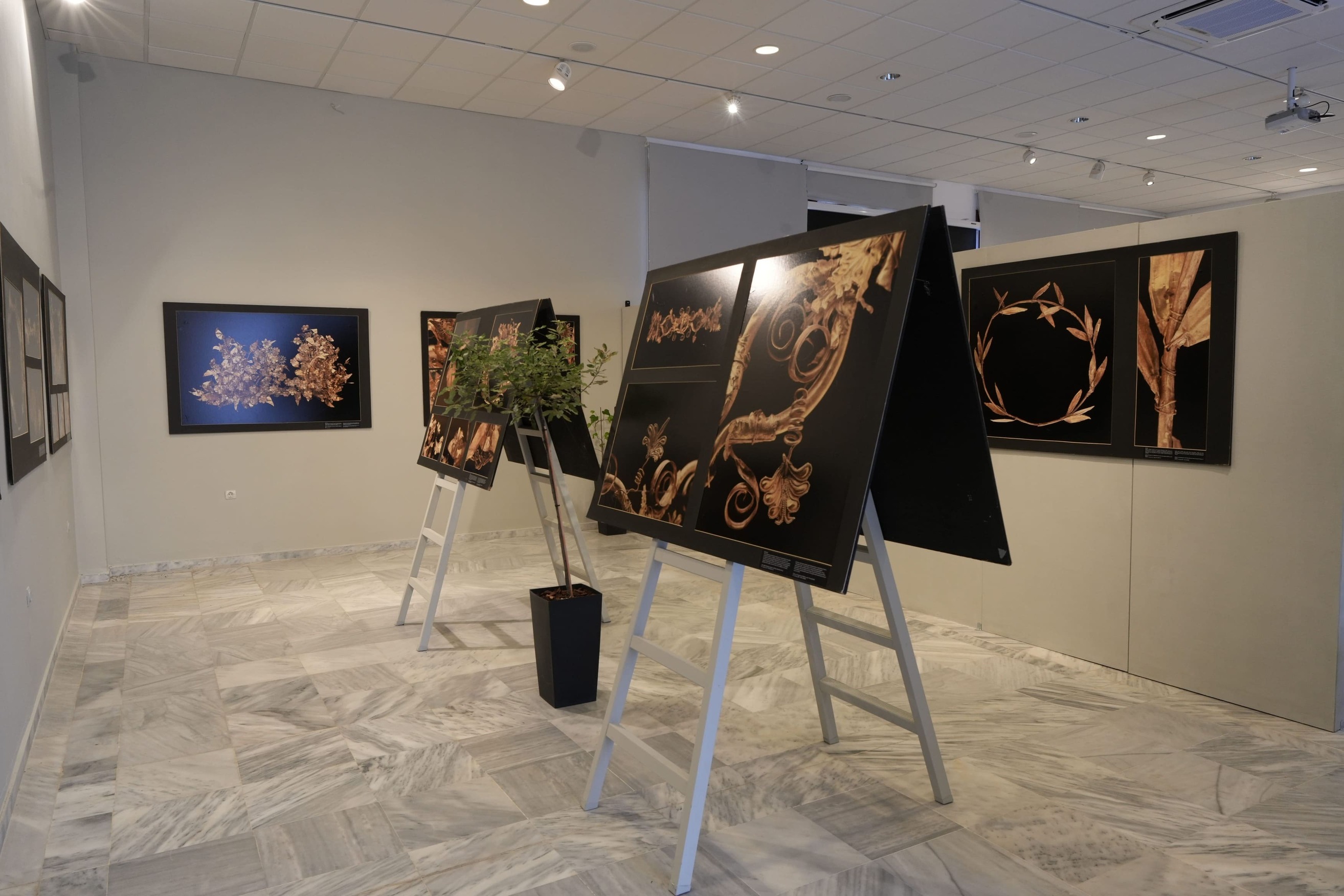



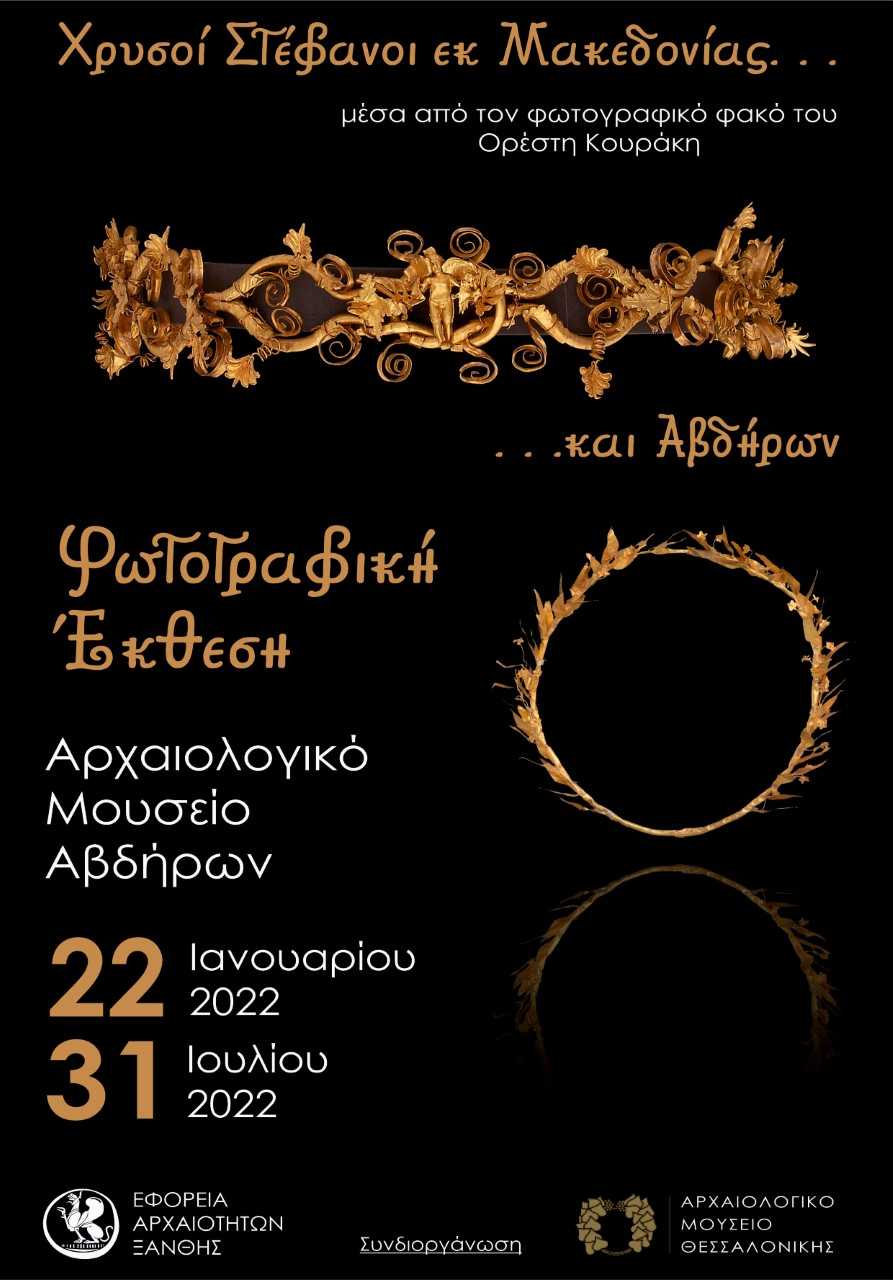
Gold wreaths first appeared in the ancient Greek world in the late 5th or early 4th century BC. Most examples come from richly furnished tombs of men and women in Macedonia, Aegean Thrace, Asia Minor, Egypt, and southern Italy. The Archaeological Museum of Thessaloniki houses one of the richest and finest collections of gold wreaths in the world.
During the Classical and Hellenistic periods, Macedonian craftsmen, making use of abundant precious metals from the Macedonian land, produced highly refined examples mainly in gold, as well as in gilded copper and, more rarely, silver. These works formed the basis of a photographic exhibition held at the Archaeological Museum of Thessaloniki from June 2011 to March 2012. The wreaths were photographed by the professional photographer Orestis Kourakis, who specialises in computational archaeological photography, providing the visual material for the exhibition. It was subsequently presented in numerous museums in Greece and abroad.
The Ephorate of Antiquities of Xanthi, in collaboration with the Archaeological Museum of Thessaloniki, hosted the exhibition entitled “Gold Wreaths from Macedonia … and Abdera” at the Archaeological Museum of Abdera, enriching it with two additional gold wreaths—the only examples discovered in the region of Abdera.
The exhibition was held from 22 January to 30 October 2022. The opening and parallel activities, including guided tours for schools and wreath-making workshops, were briefly suspended due to the pandemic but resumed as soon as conditions allowed.